
EHN is proud to celebrate eight years of publishing. To finish off this year’s anniversary week, the core editorial team selected three essays that spoke to them personally, which you can read below. First, we have Wan Yin Kimberly Fung’s lyrical essay on fieldwork, walking, and reflecting on environmental loss and return. Next, we would like to highlight Rae Ferner-Rose’s contribution to the new series Making Sense of…, a succinct piece on polar bears and the reality of their plight. And finally, we turn to Torrey Chin’s essay on the fate of pear trees, political change, and coexistence with the natural world.
We have also created an archive: a list of our original publications, book reviews, and cross-posts from the last year, and our special anniversary releases from this week.
Thank you for celebrating our eight years as a community. Enjoy and keep reading!
EHN relies on donations for our existence. While all our authors and editors are volunteers, our continued online presence requires some funding. If you wish to support us, you can do so here. No amount is too small!
1. FIELDWORK IN-BETWEEN: WALKING AND CUTTING GRASS IN JAPAN’S POST-MINING LANDSCAPE
Originally published on February 12, 2026.
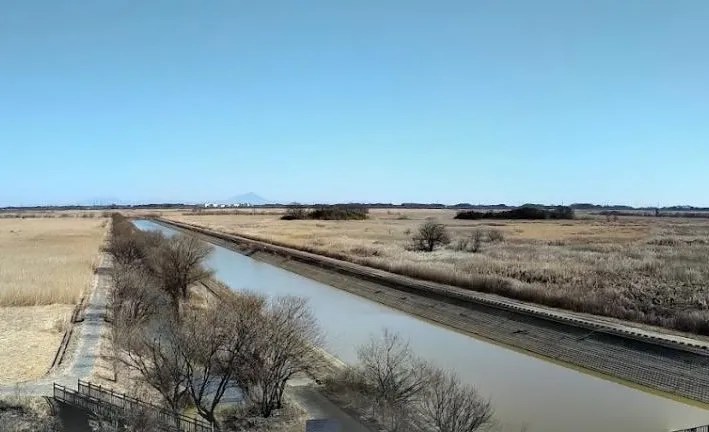
[Cover Image Description: Two reed-covered areas are divided by a concrete water conduit and surrounded by roads. On the left, the reeds stand upright and appear straw-yellow, with one corner harvested. On the right, the reeds are bent, tangled, and greyer in hue.]
Reeds grow thick across the Watarase Yūsuichi, a Ramsar wetland site and flood control basin located approximately 60 km from Tokyo, spanning Tochigi, Gunma, Saitama, and Ibaraki prefectures, Japan.
It was early summer. The reeds stood taller than me and the air was heavy with heat. Under the buzz of a gasoline brush cutter, I knelt, set aside the hedge shears, and reached for a serrated sickle to slice through thicker willows at their base. This slow work was part of an initiative launched two years earlier by a local community conservation group to counter shrubification and dehydration. Keep reading here.
2. MAKING SENSE OF POLAR BEAR HEADLINES
By Rae Ferner-Rose.
Originally published on April 24, 2026.

[Cover image description: A polar bear walking on a narrow sheet of ice floating on water, with blood-stains around its mouth and on its paws. The water below reflects the bear’s figures.]
In recent months, I have noticed a spate of ‘positive’ headlines popping up in my news feeds and on social media about the health and well-being of polar bears. Whilst some might call me a cynic, I couldn’t help but temper my optimism: a collapsing ecosystem in the Arctic has long been a disaster for the polar bears that they have become the mascot for anthropogenic climate loss.
Still, my thirst for good news – when every headline has been about the inevitable apocalypse that humans are hurtling into – took control, and I cautiously clicked the link to the BBC news article. Despite the rather general clickbait headline, the article concerned one specific group of bears living in Svalbard, Norway. Ostensibly, it did yield some ‘good news’: between 1992 and 2009, the 770 adult bears studied by scientists had become fatter and healthier. Keep reading here.
3. A PEAR TREE GREW IN DORCHESTER
By Torrey Chin.
Originally published on May 28, 2026.

[Cover image description: a sepia-toned photograph of a pear tree surrounded by a wooden fence. To the side of the photograph are the words, “A New England View.”]
In September 2024, Massachusetts added Callery pears—commonly known as Bradford pears (Pyrus calleryana)—to its Prohibited Plant List, formally reclassifying a once-celebrated ornamental tree as an invasive species. The Massachusetts Department of Agricultural Resources determined that Callery pears spread aggressively beyond their intended borders and dominate surrounding landscapes, crowding out native plants that local wildlife depend on for food and shelter. Under the new regulations, growers may sell existing trees only until December 31, 2028, while the importation and cultivation of new stock is banned immediately. The rules account for the tree’s continued use as grafting rootstock in pear production. Growers are required to carefully monitor any failed grafts and remove root systems when the grafts fail—further cementing the state’s determination to eliminate the plant species from the Massachusetts landscape. These policies do more than manage plants: they draw new lines around belonging, determining which species may remain rooted and which must be systematically removed. Keep reading here.
EHN Archive: October 2025 – September 2026
Pre-Flight Safety Briefing: Researching the Environment in the U.S. without Being Detained at the Border by Adrienne Brown, published on October 7, 2025.
Queering Sanctuary and Un/Becoming with Wolf/Dogs by August Hoffman, published on November 18, 2025.
Primordial Waters: Being and Doing the Urban Indigenous by Lamlela Plaatjie, publishe December 10, 2025.
On Snow Globes by Roisin Gilloch Boyle, published on December 24, 2025.
The Impact Assessment as Archive: Historical Approaches to Regulatory Documents from Alberta’s Oil Sands by Felice Physioc, published on January 15, 2026.
Counting What Counts: Preserving Environmental Activism History by Robyn Gulliver, published on January 29, 2026.
Fieldwork In-between: Walking and Cutting Grass in Japan’s Post-Mining Landscape by Wan Yin Kimberly Fung, published on February 12, 2026.
This is Fine: Studying Intersectional US Environmental History While it Burns Around Us by Adrienne Brown, published on March 12, 2026.
Rethinking Incomplete Metaphors for the Earth System by Valeria Zambianchi, published on April 9, 2026.
Desire in a Damaged Landscape: The Promise and Paradox of Denver’s Platte Farm Open Space by Maggie McNulty, published on April 23, 2026.
Of Ferrets and Phantoms by Olivia Davis and Risa Aria Schnebly, published on May 14, 2026.
A Pear Tree Grew In Dorchester by Torrey Chin, published on May 28, 2026.
How to Publish an Edited Collection by Raechel Lutz, published on June 11, 2026.
Wildfires Across Borders: Comparing Impacts in Los Angeles and Northern Mexico by Alyssa Spence, published on June 25, 2026.
Sex Is a History: A Review of Performance all the Way Down by Richard O. Prum by Evelyn Ramiel, published on February 26, 2026.
The Origins of Geoengineering: A Review of Green Lands for White Men by Kristin Brig-Ortiz, published on July 9, 2026.
Lessons for a Warming Planet: A Vital History of U.S. Environmental Law: A Review by Angela Ocampo, published on July 23, 2026.
Reclaiming the Visual, Ecologically by Barbara Martinović, published on August 27, 2026.
Whim, Negligence, and Socio-Ecological Harm: The Culling of Escobar’s Hippo Descendants by María del Pilar Peralta Ardila, published on April 23, 2026.
Making Sense of Polar Bear Headlines by Rae Ferner-Rose, published on April 24, 2026.
Inherited Addiction: How Decades of Fossil Fuel Marketing Built the Historical Myths Fuelling Today’s Profits by Robyn Gulliver, published on April 27, 2026.
Making Sense of Europe’s Arctic Energy Dilemma by Katrine Ehnhuus, published on June 5, 2026.
The Return to Offshore: From Nuclear Power to Data Centers by Eliza Eckman, published on August 28, 2026.
The Cultural Cost of Climate Change in Vanuatu by Racheal Osieko, published on September 7, 2026.
A Future with Non-Kins: The Rape of a Wallaby by Katie Kung, published on March 26, 2026.
Not Just Possums: Feral Cats, “Stone-Cold Killers,” and Conservation by Emily Major, published on August 13, 2026.
EHN ANNIVERSARY WEEK PUBLICATIONS 2026
Lakebody: Living Waters at Great Salt Lake by Shae Barber, published September 14, 2026.
Disruptive Reciprocity: A Review of The US Military and the Pacific Environment by Savannah Scott, published on September 15, 2026.
Silent Springs, Windswept Seas: Notes from the Beinecke’s Rachel Carson Exhibit by Ailish Lalor, published on September 16, 2026.
Disorientation: Walking Through Fire Places by Charlotte Wrigley, published on September 17, 2026.


